
Most enterprise AI projects do not fail because the model is not good enough. They fail in the gap between a demo that impressed a steering committee and a system that a thousand employees use on a Tuesday morning without thinking about it.
That gap has a name now. Practitioners call it the last mile, and the role built to close it is the Forward Deployed Engineer, or FDE. Across 2026 the title has moved from a Palantir-specific piece of jargon into job boards at OpenAI, Anthropic, Databricks, Salesforce, and Deloitte. Industry commentary has repeatedly labelled it the hottest engineering role of the year.
It is worth being precise about what the role is, because the hype has outrun the definition. This article covers where the model came from, what FDEs actually spend their days doing, which industries are hiring them, how agentic AI is reshaping the technical bar, and the open questions that nobody in the field has convincingly answered yet.
What a Forward Deployed Engineer Actually Is
An FDE is an engineer who works inside the customer’s problem rather than inside the vendor’s product. They embed with a client organisation, often physically, and build the thing the client needs using the vendor’s platform as raw material.
The distinguishing feature is not the technology. It is the position. A product engineer optimises for the average user across thousands of accounts. An FDE optimises for one account, in depth, with the customer’s actual data and the customer’s actual constraints in front of them.
That produces a strange hybrid. According to role breakdowns published by DataCamp, Exponent, and PostHog, an AI FDE is simultaneously four things:
Alexey Grigorev’s account of the day-to-day work describes FDEs building functional prototypes within days of first contact with a client, then hardening them over weeks. Speed is not a nice-to-have in this role. It is the mechanism by which trust gets established early enough for the engagement to survive.
Where the Model Came From
Palantir built this. Over nearly two decades the company institutionalised the idea that complex software has to be implemented with customers rather than sold to them, and it staffed accordingly. The Foundry deployment practice remains the reference implementation of the model.
For a long time that looked like a quirk of one company operating in unusually messy domains such as government and defence. Then large language models arrived, and every enterprise discovered that raw capability and working software are separated by an enormous amount of unglamorous integration work.
Analyses from Perspective AI and MindStudio note that Anthropic and OpenAI have both explicitly borrowed Palantir’s forward-deployed playbook. When two frontier labs independently copy the same operating model, that is a signal the model is structural rather than stylistic.
The Last Mile Problem in Concrete Terms
The phrase “last mile” is doing a lot of work, so it helps to unpack it.
A client has a model with excellent benchmark scores. They also have a claims system written in 2004, a data warehouse where three teams disagree about what “active customer” means, a compliance function that needs an audit trail, and a set of users who will abandon any tool that adds a step to their workflow.
The model does not solve any of that. The FDE does. Bland AI’s breakdown of AI deployment work puts the bulk of the time into four buckets.
The fourth item is the one that separates FDEs from strong engineers who are unhappy in the role. Ambiguity is not a temporary condition of the engagement. It is the engagement.
Use Cases by Industry
The model concentrates where complexity and stakes are both high. Based on published job postings and company announcements, five verticals dominate.
- Clinical documentation automation
- Diagnostic decision support
- Patient data integration across systems
- Risk modelling
- Compliance automation
- Fraud detection pipelines
- Workflow automation
- AI-assisted customer support
- Internal knowledge management
- Data integration at scale
- Operational intelligence
- The original Palantir domain
- Demand forecasting
- Supply chain optimisation
- Customer personalisation
OpenAI’s dedicated Healthcare FDE posting in New York is the clearest evidence that vertical specialisation is happening. A generalist can integrate an API. Understanding why a clinician will not accept a suggestion that arrives at the wrong point in the charting workflow requires something closer to domain fluency.
Agentic AI Has Raised the Technical Bar
The most significant change in 2026 is what FDEs are being asked to deploy.
Anthropic’s forward deployed practice, documented in the ZenML LLMOps Database, frames its work explicitly around agentic platforms: systems where AI takes multi-step actions rather than returning a single response. That shift changes the engineering problem substantially.
| Concern | Single-turn LLM integration | Agentic deployment |
|---|---|---|
| Unit of failure | One bad response | A chain of actions with side effects |
| Testing | Prompt and output comparison | Trajectory evaluation across scenarios |
| Safety work | Content filtering | Permission boundaries and guardrail design |
| Integration surface | One API call | Tool chaining across many systems |
An FDE deploying an agent has to reason about system behaviour over an extended, partly autonomous trajectory. That means multi-agent orchestration, tool and API chaining, guardrail design, and evaluation pipelines that measure performance across diverse scenarios rather than on a fixed test set.
The Full Loop: Why Vendors Fund This
The obvious objection to the FDE model is that bespoke consulting does not scale. Alex Wang’s widely shared analysis frames the role precisely around that tension: FDEs let AI companies do things that do not scale, at scale.
The resolution is that an FDE engagement is not only a delivery function. It is also market research with a revenue line attached. ZenML’s documentation of OpenAI’s approach describes a closed loop.
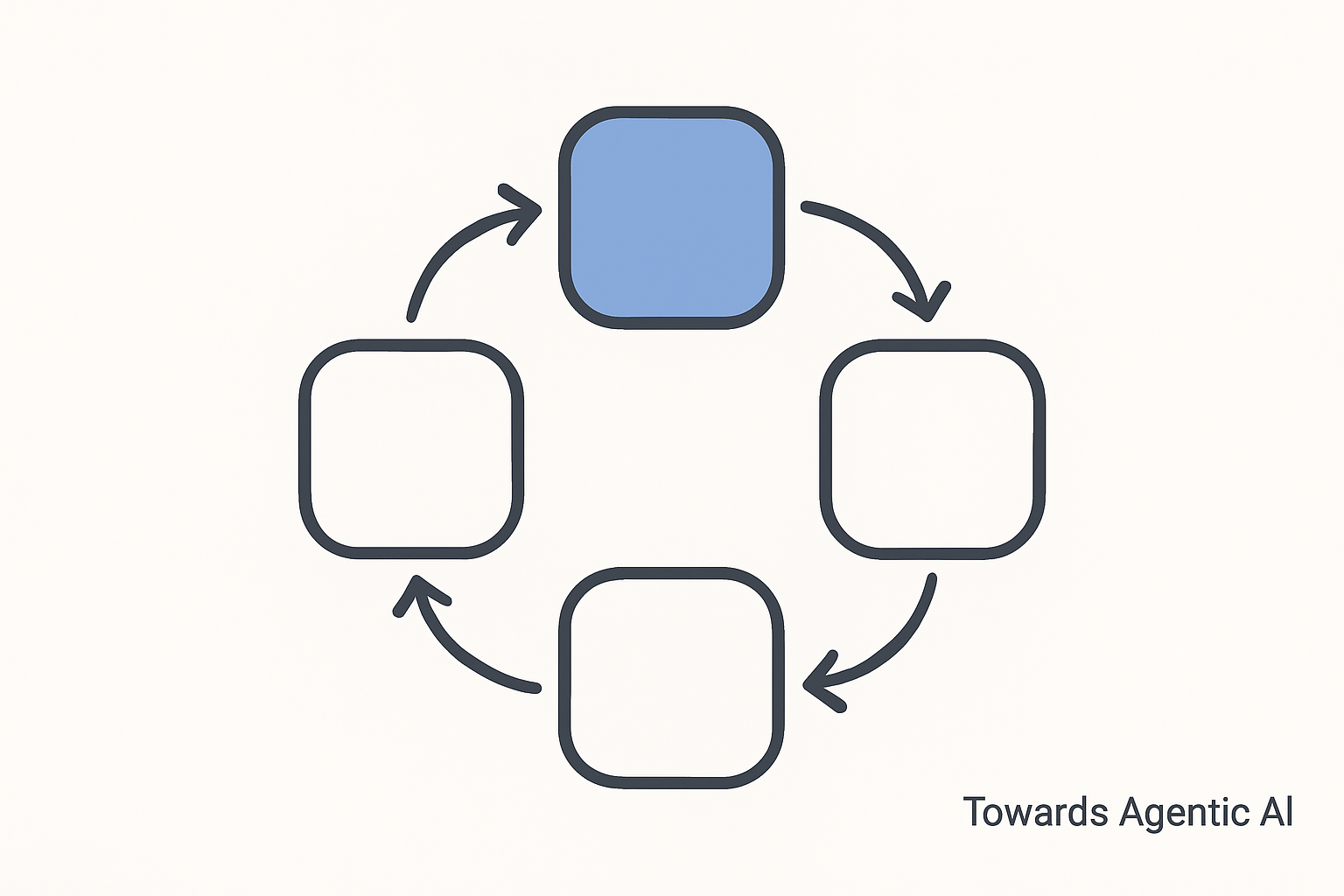
Ideas2it and ZenML both describe a similar engagement shape within a single project: rapid discovery, a prototype in the first week or two, iteration against real usage, hardening to production reliability, then knowledge transfer so the client team can operate the system without permanent dependency.
That last step matters and is frequently skipped by firms treating FDE work as ordinary staff augmentation. An engagement that ends with the client unable to maintain what was built has produced revenue, not capability.
Three Ways the Model Is Organised
Not every FDE works for a model provider. The market has settled into three configurations, and they carry different trade-offs.

QuantSpark’s comparison of forward-deployed agentic partners frames the choice as a trade between cost, depth of platform integration, and flexibility. Mid-market organisations rarely get a frontier lab’s FDE team, which is exactly the gap the boutiques exist to fill.
The Skill Profile, and How People Get In
Aggregating the OpenAI and Anthropic postings with career guides from Exponent, DataCamp, and Sundeep Teki’s interview guide produces a reasonably consistent picture.
On the technical side: Python fluency, hands-on experience with LLM APIs and prompt engineering, system design and API integration, cloud infrastructure across at least one major provider, and data work covering pipelines, vector databases, and retrieval-augmented generation. For 2026 roles, practical experience with agentic frameworks has moved from differentiator to expectation.
On the human side the list is shorter but harder to fake: stakeholder communication, the ability to convert a vague business problem into an engineering specification, comfort with requirements that change mid-engagement, and genuine ownership of outcomes.
The typical entrant is a senior software engineer with five or more years of experience, arriving from product or solutions engineering. A second, smaller stream comes from management consulting with strong technical backgrounds. Interview processes reportedly test both live coding and case-study business decomposition, which is an unusual combination and a fair reflection of the job.
What Nobody Has Settled Yet
Being honest about the open questions is more useful than repeating the hype.
The definition is genuinely contested. Practitioner discussion on r/ExperiencedDevs includes a substantial contingent arguing that FDE is a rebrand of solutions engineering with better pay. Hiring managers at different companies clearly scope the role differently, and no shared standard has emerged.
Scalability remains unresolved in practice. The flywheel argument is elegant, but the published sources acknowledge the tension without showing how it holds up at hundreds or thousands of enterprise accounts. It is asserted more often than demonstrated.
Compensation figures are soft. Multiple sources describe pay well above standard engineering rates. Precise, verified ranges are inconsistent across sources and vary by company, geography, and vertical. Treat any specific number you see as a claim to check against live postings.
Agentic maturity is unclear. It is difficult to tell from public sources how many engagements deploy genuinely autonomous agents versus conventional integrations described in agentic language.
Longevity is a real question. If integration tooling matures enough that ordinary product engineers can do this work, the role could compress. The counterargument, that each capability jump generates fresh integration complexity, is plausible and unproven.
Regulated verticals are underdocumented. OpenAI’s Healthcare FDE role exists, but public material on how FDEs actually navigate HIPAA, FDA guidance on AI and machine learning, and clinical validation is thin.
What This Means If You Are Choosing a Direction
For engineers, the role is a genuine opportunity with a specific personality requirement. If you want deep autonomy, direct contact with business impact, and variety, it fits. If you want a stable codebase, a clear backlog, and requirements that hold still, it does not, and no amount of compensation fixes that mismatch.
For organisations, the more useful takeaway is structural. The FDE surge is evidence that model capability has decisively outrun deployment capability. Whether you hire FDEs, contract them, or build the skill set internally matters less than acknowledging that the last mile is where your AI budget will actually be spent.
The title may not survive the decade. The function will, because the gap it exists to close is a permanent feature of deploying powerful, general technology into specific, messy organisations.
References:
- Forward Deployed Engineer (FDE), San Francisco-sf-san-francisco), OpenAI’s official role posting
- Forward Deployed Engineering, Deloitte’s formal service line
- What Is a Forward Deployed Engineer?, DataCamp’s overview of role components and skills
- What AI Forward-Deployed Engineers Do, Alexey Grigorev on day-to-day working style
- WTF is a forward deployed engineer?, PostHog on origins and current relevance
- Forward Deployed Engineers Are Making AI More Human, Salesforce on the people-centric side of the role
About the Author
Aqil Khan is an Agentic AI Engineer and Data Governance & Analytics Consultant specializing in building data pipelines and autonomous AI systems. He writes about the frontier of AI coding assistants, agentic workflows, and intelligent data systems at Towards Agentic AI.